
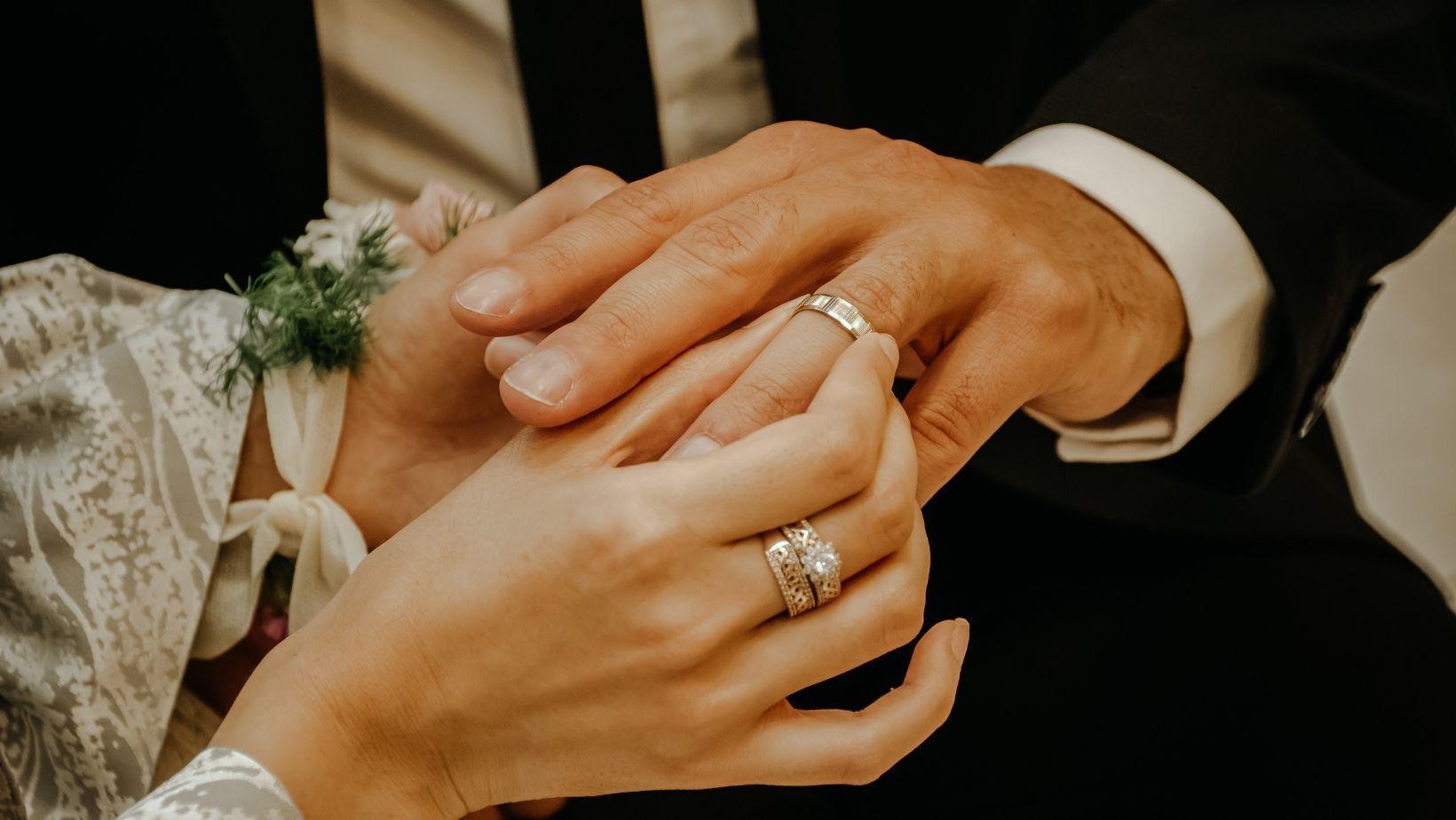
Nobody hands you a manual when you become a parent, but if they did, there should be a page about your wedding ring. There isn’t, though, so most of us just keep wearing it the same way we always have — through diaper changes, monkey bars, dish duty, all of it — without giving it a second thought.
As a parent, your hands have a completely different job now than they ever did before. You’re hoisting a toddler onto your hip several times a day, gripping a stroller handle, catching a kid mid-fall off the couch, wrestling a car seat buckle that seems designed by someone who hates parents. All that grabbing, catching, and bracing puts your hands, and whatever’s on them, through a lot more than they used to handle.
Wait, What’s Ring Avulsion?
It’s a term you’ve probably never heard, and honestly, most people go their whole lives without needing to know it. Ring avulsion happens when a ring gets caught on something and the rest of the hand keeps moving. Doesn’t sound like much until you picture it: your ring snags a playground bar, a fence post, the edge of a laundry basket, and your hand is still in motion. Metal doesn’t stretch or give, so it’s everything underneath — skin, tissue, blood vessels — that takes the hit.
It’s rare. Nobody’s saying you should panic every time you swing your kid up onto the monkey bars. But parents are, unfortunately, a pretty high-risk group for this exact scenario, mostly because our hands are doing ten things at once and half of them involve grabbing something fast.
Where It Actually Happens
It’s not always a dramatic, expected moment that causes ring avulsion. Most of the time, it’s a mundane, everyday moment: catching your kid on the slide, quickly shutting a chain-link fence, or even reaching into a car to grab a diaper bag off the floor. It’s often the things we overlook, not the extreme stuff, that trips us up.
Chores can pose a danger too: gardening, hauling grocery bags with the handles cutting into your fingers, wringing out a mop, reaching into the back of a cabinet where your hand catches on a shelf edge. None of these are obviously dangerous, because most of the time they aren’t. But “most of the time” leaves a small window where things could go wrong — and as a parent, you already spend more hours with your hands than the average adult.
Why a Traditional Band Doesn’t Adapt to Your New Lifestyle
A solid metal ring is made to survive basically anything, which is exactly the problem: the one time your hand needs to slip free, it won’t—no stretch, no bend, nothing. A seatbelt lets go under enough pressure. Shoelaces come untied on purpose when you yank them. Your ring doesn’t have anything like that built in, so if it catches on something, your hand is the only part that can give.
Most people wear a metal band for decades, and nothing ever happens, so this isn’t a reason to panic or take it off for good. It’s just worth thinking about during the hours your hands are doing the most — chasing a toddler around the park, pulling weeds, wrestling a car seat buckle before you’ve even had coffee.
What a Lot of Parents Are Doing Instead
More and more people are keeping two rings in rotation: the “real” one for everyday life, and a flexible silicone ring for the hours when their hands are literally doing the heavy lifting. Silicone rings have become the go-to for this, and brands like Enso Rings have built a whole following around it, because they:
- Give way instead of catching when they snag on something, which lowers the odds of that avulsion scenario altogether
- Don’t need to come off for lotion, sunscreen, bath time, or dishes, since they’re fully waterproof
- Are inexpensive enough that you can keep one in the diaper bag, one by the door, and one in the car without thinking twice
- Come in so many colors and styles, including options built to look like a traditional band, that they don’t feel like a downgrade from your “real” ring — and companies like Enso size theirs to match standard ring sizing, so switching between the two is a non-issue.
It’s also worth knowing that a well-made silicone ring isn’t a flimsy stand-in. Enso, for example, backs its rings with a lifetime warranty against rips, tears, stretching, and discoloration, so choosing the flexible option during the busy hours doesn’t mean choosing something less durable.
This isn’t about replacing a ring that means something to you. It’s about giving your hands a break during the hours when they’re basically working a second job.
A Small Swap That’s Genuinely Worth It
Parenting already asks a lot of your hands, and your patience, and your sleep schedule, and pretty much everything else. Protecting your fingers during the chaotic stretch of the day isn’t complicated or expensive. It’s just one small habit that quietly removes a risk you probably never thought about until right now.
Your wedding ring will still mean everything it always has. It just might spend playground hours safely in your pocket instead.
